
Item List

TEXAS
When Liam Dewberry connected with Texas Workforce Commission’s Vocational Rehabilitation (VR) Services, he dreamed of turning his love of languages into a career. Diagnosed with autism and a language processing disorder, Liam faced challenges early on. However, with guidance from his VR counselor and support from Workforce Solutions Greater Dallas and Dallas College, he found his path.
After earning his GED and associate’s degree, Liam continued his studies at the University of North Texas, pursuing a bachelor’s degree in linguistics. Liam’s passion has taken him around the world. Last summer, he taught English in Japan, sharing his love of communication and culture.
Through vocational rehabilitation counseling, academic assistance, and driving training, VR helped Laim gain independence and confidence. Today, he’s exploring future careers in computational linguistics, natural language processing, and AI ethics, proving that determination can turn dreams into reality.
TEXAS
Rising Strong: How VR Empowered Greyson McMurray to Rebuild Her Life and Chase Her Dreams
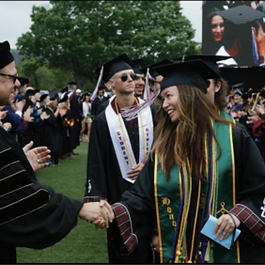
As a survivor of domestic violence and a life-changing injury, Greyson McMurray found new hope through Texas Workforce Commission’s Vocational Rehabilitation (VR) Services. What began as a request for help walking again turned into a powerful journey of transformation. Vocational Rehabilitation Services helped Greyson receive a total hip replacement, physical therapy, and mobility supports, restoring her independence and confidence.
With encouragement and counseling from her VR counselors, she discovered new strengths and set her sights higher, earning a bachelor’s degree in accounting with VR-sponsored tuition. When hearing challenges arose, VR provided hearing aids to ensure she could succeed in the classroom and beyond.
Today, Greyson works for a Certified Public Accounting (CPA) firm and, with VR’s support, is completing her master’s degree at Texas A&M University-Corpus Christi. She’s pursuing a master’s degree to advance her career and broaden her opportunities in accounting and human resources, and she expects to graduate this December.
Greyson’s story shines as proof that with the right support, determination and opportunity, lives can be rebuilt stronger than ever.
Greyson quote: “Nelson Mandela said, ‘It always seems impossible until it’s done.’ TWC VR, my teachers and family have been my biggest cheerleaders and got me back into the workforce. Now, I am inspiring my son and hope to inspire other non-traditional students, survivors, and those who think the world has lost faith that they too can achieve their goals one step at a time.”

INDIANA
Success Story: Bailey Riggins – Styling Her Future with Support
Bailey Riggins dreamed of becoming a cosmetologist but faced physical barriers that made prolonged standing difficult. Her Indiana VR counselor, Tracy Cahee, stepped in with targeted supports, including tuition assistance and a specialized salon chair to enhance stamina and mobility.
With these accommodations, Bailey completed her training, gained experience at Great Clips, and now thrives at JC Penney Salon. She’s also enrolled in an instructor training program, eager to teach and grow in her field.
“I don’t believe I’d be in the job I have now or in school without VR. Thank you for giving me the support I needed to get where I am today.”

OREGON
From a young age, Marina Rake faced progressive vision loss and often felt like the only one navigating school with low vision. That changed when she joined the Orientation and Career Center at the Oregon Commission for the Blind (OCB), where she gained crucial skills, like using a white cane, that gave her independence as she transitioned from high school in Oregon to college in Texas.
A summer with OCB’s Summer Work Experience Program (SWEP) introduced Marina to employment, which eventually led her to a job-coaching role at OHSU. There, she helped clients struggling with social security benefits, an experience that sparked her passion for law and advocacy. Today, Marina is studying law, determined to improve systems for others. Her journey shows what’s possible when people with vision loss have access to the right tools and training.
OCB’s programs like SWEP rely on federal WOIA Title IV funding, distributed through the US Department of Education. Support your state's vocational rehabilitation to empower leaders like Marina. Visit csavr.org or oregon.gov/blind for more information.

OREGON
When Catherine “Katt” Green lost her vision, she thought her creative career might be over. But with support from Oregon Commission for the Blind (OCB), she rebuilt her independence and her future. OCB helped Katt master essential mobility and daily living skills, return to college with confidence and learn adaptive technology for photography. Today, she’s not only thriving as a straight-A student at Mt. Hood Community College, but she’s also running her own studio, PDX Blind Photos, where she captures bold, award-winning images.
Katt’s story is proof that businesses benefit when Oregonians with vision loss are empowered to work. Her studio thrives on her unique perspective, blending artistry with adaptive tools to deliver powerful portraits and photojournalism that stand out in the marketplace.
OCB relies on federal WOIA Title IV funding, distributed through the US Department of Education. Support your state's vocational rehabilitation to empower entrepreneurs like Katt. Visit csavr.org or oregon.gov/blind for more information.

IOWA
Aaron Fratrik is a Client Coordinator at Talk to Me Technologies in Cedar Falls, where he’s worked for the past 18 months. The company helps children and adults with communication differences related to conditions such as autism, cerebral palsy, Down syndrome, stroke, and ALS. Aaron says his favorite part of the job is connecting with families and seeing that his work makes a positive impact. “I find purpose in knowing that my work makes a positive difference in the disability community,” he shares.
Aaron first connected with the Iowa Department for the Blind (IDB) after his eye doctor encouraged him to apply for services. At the IDB Orientation Center, he developed skills in cane travel, home management, braille, and technology that strengthened his confidence and independence. The experience not only prepared him for daily life but also inspired his career path and deepened his passion for supporting others. After graduating, Aaron moved into his own apartment and now uses public transportation to navigate his community with ease. Reflecting on his journey, Aaron shares, “I would not be where I am without the services from IDB.”

MINNESOTA
Kwik Trip Partners with VRS to Provide Meaningful Employment
If you drive around the Midwest region of the United States, you’re probably refueled at a Kwik Trip convenience store at some point. What you might not know is that for over three decades this family-owned company has worked in partnership with Vocational Rehabilitation Services (VRS) programs in Iowa, Minnesota and Wisconsin, connecting people with disabilities to employment through the Retail Helper program.
Kwik Trip, Inc. is based out of La Crosse, Wisconsin, and has over 850 stores across the Midwest, in North and South Dakota, Minnesota, Iowa, Wisconsin, Illinois and Michigan. Their mission is “to serve our customers and community more effectively than anyone else by treating our customers, co-workers, and suppliers as we, personally, would like to be treated and to make a difference in someone’s life.”
The inception of the Retail Helper program was a direct result of Kwik Trip’s commitment to their mission. One of the Store Leaders chose to see a person with a disability for their capabilities and the value they could add to the store. There was also a need to have dedicated staff to serve customers, as the range of functions Guest Services Coworkers had to manage could sometimes get in the way of the level of service excellence they strived for, particularly during busier times.
In partnership with Wisconsin’s Vocational Rehabilitation (VR), they designed a position, along with a training and recruitment plan, to hire people with disabilities, making a difference in their lives, too. The model was soon replicated in Minnesota and Iowa.
Since Minnesota VRS started partnering with the Retail Helper program in 2013, employment through Kwik Trip has made a difference in the lives of hundreds of Minnesotans with disabilities. In the past 12 months, 29 MN VRS program participants have been hired at Kwik Trip, working as cashiers, in food service or retail. Overall, there are more than 200 people with disabilities employed through the Kwik Trip Retail Helper program in Minnesota! Some have been with the company for many years and advancing in their careers.
Take Alan, for example. He started in 2018 at one of the Kwik Trips in Duluth, Minnesota, doing maintenance. He soon started showing a passion for understanding how all the machines worked and quickly became “the machine guru on the team,” as per Alecia, his Store Leader, who started relying on Alan as a resource.
Eventually, Alan was ready to transition to full-time work. Alecia, knowing his potential, supported the transition by training him on register duties – which Alan took on successfully.
“He’s crucial to the daily operations of the store. If there was an ever an MVP at our store, it would be Alan,” said new Store Leader Sam. “His energy is infectious. Every day starts with Alan’s signature catch phrase, ‘Are you ready for a fun and exciting day!?’”

MINNESOTA
Taylor Corporation is a global leader in the communications industry and one of the largest companies of its kind, offering printed products, digital services and integrated technology solutions. They have been a valued partner for the South Central UAA and Minnesota VRS, hosting weekly hands-on training that allow students to apply the knowledge and skills learned in the classroom to real-life working environments. Their scale and expertise make them an ideal partner for training and employing future talent.
Participants in the South Central UAA complete an eight-week training program to become printing press operators. They then take part in a two-week job tryout at Taylor Corporation, giving both students and the employer the chance to assess job fit, explore opportunities for skill development and find future career paths within the company. This structured approach ensures that students can apply classroom learning in real workplace settings, while employers get the benefit of well-prepared, motivated workers.
At the conclusion of the 2025 program, five UAA graduates were hired to work at Taylor Corporation.
MINNESOTA
From a young age, Stephanie LoRusso focused on everything she could achieve, even when others believed her disabilities would limit her. Growing up in a small town in Wisconsin, she was constantly told she wouldn’t be able to do hard things—her high school guidance counselor even said she didn’t have what it takes to make it through college. Stephanie responded, “watch me!” and earned a bachelor’s degree in psychology with a minor in vocational rehabilitation, plus a Master of Science in Vocational Rehabilitation Counseling. Without VRS in her school, she often felt alone and misunderstood, navigating challenges by herself. That lived experience led her to Minnesota VRS, where she connects with participants and shows what’s possible. With support from her first manager, Thant Pearson, she gained confidence, found technology, and secured accommodations.

NORTH CAROLINA
My name is Veronica Puente, and I started my journey with N.C. Division Services for the Blind (DSB) in 2011. I went to community college, and though it took a while to finish my degree due to medical issues, I graduated in December of 2014. I then went to Meredith College, where I graduated with my BA in International Relations in May of 2017. It took me time to find my path, and DSB helped me throughout this process. I volunteered with children and discovered my love for teaching! In May of 2024 I graduated with a master’s in teaching with a focus on Visually Impairments from North Carolina Central University. Now I am the braille teacher for the Governor Morehead School for the Blind in Raleigh North Carolina.

NORTH CAROLINA
Consumer Name: Debbie Goldston
I was born with cone dystrophy. For years, I managed my condition while working, determined to maintain my independence and career.
I found out I needed glasses to enhance my vision. Unfortunately, without health insurance, I could not afford them. The doctor at Duke recommended NC Services for the Blind to help accommodate me with these glasses.
I contacted DSB and Britney Hodges, a Vocational Rehabilitation Counselor, became my counselor with NC Services for the Blind.
“Britney was so helpful, knowledgeable, and understanding.”
I received the glasses that were needed, low vision tools and guidance and counseling on career goals.
When discussing future goals, I told Britney that I wanted to work for a place that was “meaningful.”
Several months later, I was working with NC Services for the Blind and have been there for 6 years and absolutely love my job with NC Services for the Blind.

NORTH CAROLINA
Hi, my name is Marie Perez
I am writing this letter to express my gratitude to NC Services for the Blind vocational rehabilitation. When I first came to Steve Alexander with NC Services for the Blind, I was nearly completely blind. Due to diabetes, I lost my vision. After many surgeries and injections, my vision was restored to where I was able to be functional again. I was able to obtain a driver’s license. I also started taking classes at Beaufort community college. I received my associates degree with help from NC Services for the Blind vocational rehabilitation. They supplied me with tools that helped me be successful such as a laptop, iPad, a printer and many other tools. I am currently working at ECU health as a CNA 2. I am now able to support myself financially. I am especially thankful to Steve Alexander for always believing in me and guiding me through this process.

ARIZONA
When Sarah Bates gave birth to her son Anthony Valenzuela, she had no idea he had Down syndrome. But instead of being distressed, Sarah poured her energy into learning everything she could to help support her son. Now he's a two-time graduate, has held multiple jobs, and is currently thriving at Spinato's Pizzeria.
Anthony’s journey was supported early on by Vocational Rehabilitation Services (VR), where he enrolled in a program called Success University. This service is part of Tempe Union High School District’s, Transition School to Work Program, which is funded by VR. There, he gained valuable life and job skills and even took on a role at Original Burrito. He also received Work Adjustment Training and Job Development and Retention from VR. After graduating, he joined the Educate Empower Succeed program and worked as a Courtesy Clerk at Bashas’. Thanks to Sarah’s support, he later secured a job at Spinato’s Pizzeria—a place he had previously volunteered through VR.
Anthony’s experience with VR was overwhelmingly positive, especially thanks to his VR counselor, Margot D’Souza.
“She was just phenomenal—always on top of everything. It was inspiring to see someone who truly loved their job and did it with such heart,” said Sarah.
One of Sarah’s proudest moments came recently when Anthony’s manager at Spinato’s Pizzeria told her he no longer needed supervision—his performance spoke for itself.
Outside of work, Anthony’s zest for life shines just as brightly. He enjoys hitting the gym, FaceTiming his friends, and making TikToks. One of his dreams? Getting behind the wheel of a Lamborghini someday.
“He’s just an amazing kid,” Sarah beamed. “He goes above and beyond, and he’s incredibly caring. He truly values time with family, friends—really, with everyone he meets.”

RHODE ISLAND
Tonia Croce
Perseverance should be Tonia’s middle name. Tonia came to the Office of Rehabilitation Services (ORS) as a self-referral in August of 2022. As an older adult, Tonia qualified for services and underwent a vocational evaluation. This evaluation revealed so many strong aptitudes that were above average. Initially Tonia was thinking of a part-time position in an office environment assisting a business with their mission.
However, the story does not end there. After the company downsized in March 2023, Tonia set out to find her next career. Taking information from her first assessment counseling, along with the benefits planning she received, Tonia quickly decided to enroll in the Certified Work Incentives Counseling online training program out of Virginia Commonwealth University. This allowed her to become self-employed and to work in any state. Two and a half years later, Tonia has received her Certification, completed a 9-month Internship working in her new field and is currently setting up her home office. She is busy networking/making connections to better assist the clients she will be working with.
Another successful story, thank you Tonia.
Counselor: Olivia Butler

RHODE ISLAND
Edward Torres, 35, lives in Providence with his family. He graduated from Hope High School and went on to attend the day program at Action Based Enterprises. He was initially referred to ORS in 2015 and participated in supported employment services including a vocational evaluation and community-based work assessment. In 2018, he was hired as a parking lot attendant where he worked until 2020 when the pandemic no longer brought traffic to the lot.
Eddy reapplied to ORS in 2023 and participated in a nine-month Adult Project Search Program at Bally’s Twin River Resort & Casino. ORS provided additional supports through an assisted technology evaluation, purchase of an Apple watch to help him keep track of his time, and benefits counseling. During this time, he completed three different internships – housekeeping and front desk at the hotel and cashier at the retail store. He excelled at whatever tasks he undertook and quickly became a trusted member of the team.
When Project Search graduation came around in July 2024, Bally’s knew they did not want to lose a valuable asset. With the help of Access Point vocational staff, Eddy was hired as a bar back in the events center, initially working 23 hours a week. As his experience grew, his hours were also increased.
Access Point continues to check in on Eddy, even though his case has now been successfully closed with ORS. Recently, Eddy gave a speech at this year’s Project Search celebration to show what determination and hard work can do.
RHODE ISLAND
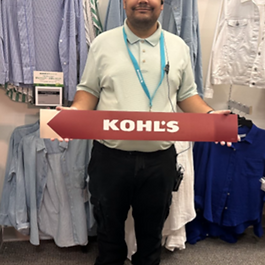
Cesar Cordero Jorge has been involved with the Office of Rehabilitation Services (ORS) since August 2024. He is a very friendly, outgoing, social, and highly motivated gentleman.
Cesar has been successfully employed by Kohl’s since May 2025. His job title is Housekeeping and Operations staff. He works 20 hours per week. His duties include ensuring the store is cleaned and organized before guests arrive. Duties also include dry mopping, vacuuming, cleaning high touch surfaces and operating a trash compactor.
Cesar was assisted by ORS with the following services: Project Search – Bally’s, Job Development, Job Placement, Job Retention and Supports along with Brokerage Services with Iraida Williams through LAZO and Assistive Tech Assessment/Equipment with Daniel Multer. Cesar was assisted with his vocational services through Access Point RI and developed a great relationship with his Job Developer Jennifer Fraser and his instructor at Project Search Tammy Fonseca. Cesar graduated from Project Search - Bally’s on 6/12/25.
Cesar is doing phenomenal at his job and is an integral part of Kohl’s. He is affectionately known as the mayor by those close to him and his big personality and smile brightens everyone’s day.
VERMONT
Jessie Marlin Maclean was in the car with her young daughter when she realized she couldn’t see the road well enough to drive safely. That was 21 years ago when Jessie was 40 — and the last time she drove. It was, however, the start of another journey for the Cavendish, Vermont, resident, who has retinitis pigmentosa (RP).
“The hardest thing to do in our lives is to ask for help,” Jessie said. “Instead of looking at that as defeat, look at it as a chance to help yourself.”
Jessie contacted the Vermont Division for the Blind and Visually Impaired for assistance with mobility training, transportation assistance, technology support, and vocational rehabilitation.
“Being a teacher is what brings me all of my (professional) joy,” Jessie said. The DBVI team connected her with Vermont Adult Learning, where she now teaches Spanish and English as a Second Language in small or individualized classes.
VERMONT
Colby Masse became a volunteer firefighter at 15 and became interested in a career in emergency medical services.
“There’s no list of jobs for people who are visually impaired,” Colby said. “You gotta make it. Don’t limit yourself.”
Today, through hard work, determination, and the support of the Vermont Division for the Blind and Visually Impaired, Colby realized his goal of becoming a paramedic two years.
“DBVI is a huge resource and have access to other things you might not know you need or would be helpful,” he said. “The resources are tailored to your needs.”
DBVI provided assistive technology through his educational journey, including e-books, audio materials, and large print texts. They conducted workplace assessments and supplied specialized medical equipment.
“It all comes down to being adaptive and able to adjust,” Colby said. “Embrace your visual impairment or whatever you have. It doesn’t have to limit you.”
VERMONT
Marc Companion was a civil engineer, university professor, and world traveler when an exam revealed retinitis pigmentosa 30 years ago. That’s when he first connected with Vermont Division for the Blind and Visually Impaired.
“If we have a bad knee, we need a brace. We just happen to have bad eyes,” Marc said. “It doesn’t have to define us.”
Over time, Marc’s case would re-open with DBVI as his vision needs shifted. DBVI provided laptops with voice controls, scanners, and other tools to help him stay employed. Later, Marc decided to become an Orientation and Mobility instructor.
His philosophy? A hands-on, self-help approach. Empowerment over caretaking.
“DBVI is about showing people the possibility,” he said. “Build some skills, confidence, and self-esteem. Then the world is your oyster.”
Marc still travels – Tanzania, South Africa, Colombia – leading student trips and providing white cane training. “Blindness doesn’t mean the end,” he said.
MASSACHUSETTS
In May 2024, a job seeker living with a traumatic brain injury reached out to MassAbility for support in finding meaningful employment. With the help of adaptive technology provided through our partner organization, she was able to continue her job search from home and stay focused on her goals.
The team encouraged her to explore new opportunities, including volunteering, which ultimately led to a promising opening at Road to Responsibility. With resume support, application guidance, and interview practice, she built the confidence and skills to apply and was eventually offered a position!
By February 2025, she began working as at Road to Responsibility, earning $18 per hour and stable part-time employment. She now shares how much she enjoys her role and the community she has built there. Through close collaboration across different support networks, her team helped her to achieve fulfilling, sustainable employment aligned with her passions.
MASSACHUSETTS
Roosevelt shines as a returning participant with MassAbility. In 2021, he completed Human Services training and worked as a driver supporting people with disabilities. After a health setback and long recovery, he came back in early 2025 with hopes of advancing his career in a more impactful role.
With extensive experience in the human services field, Roosevelt began interviewing for positions with support from his counselor. Between January and April, he had multiple opportunities but hadn’t yet found the right fit. That changed when he interviewed with Recovery Exchange of Lynn, where he reconnected with a former trainer who recognized his strengths and advocated on his behalf.
Roosevelt was offered a position as a Recovery Coach and now supports more than a dozen individuals in their recovery journeys. As he puts it: “The job feels like a fit.” He is also considering pursuing a Social Work degree at Salem State University this fall!
IDAHO
Trisha has been an educator in Special Education for almost 30 years. She started this journey in California and in the 90’s moved to Idaho where she continued her career. She has a Bachelors in Psychology as well as two Masters in both Educational Psychology & Counseling, and Educational Leadership & Policy Studies. Trisha has been a client at ICBVI a couple of times. Both times, she has focused on continuing to learn independent living skills which have been beneficial not just in her day to day life but also at work.
Trisha shares that her journey with ICBVI has been “wonderful”, that the staff at the ATC and VR have been very helpful, and she enjoys working with them. She adds that some of the main things she has gotten out of coming to training and receiving services at ICBVI are; being able to feel comfortable saying the words, “I am blind.”, gaining improved mobility skills, as well as improved mainstream and assistive technology skills. Overall, being part of ICBVI has led Trisha to become more comfortable with her blindness and a better self-advocate.
Trisha’s goal is to continue with maintaining her independence and to continue teaching. Her personal and career paths have not always been easy; at times she wonders if continuing to fight the fight is “worth it”. At work, partnering with her VR Counselor, Rocio and other ICBVI staff, she has had to fight some battles to ensure she receives suitable accommodations to continue doing her job. Trisha has championed over these battles and learned from them as well. Trisha is happy working and teaching her students. Trisha is a great educator, passionate, and loves her students. She was awarded the Teacher Of The Year Award, given by the West Ada Education Association The West Ada School District is very lucky to have her as a teacher at Rocky Mountain High School.

ALABAMA
Mona Lewis' journey has been difficult. After serving her time incarcerated, convincing businesses to offer her a second chance through employment was challenging. She also has disabilities that cause physical fatigue, and cognitive and psychological impairments. Is-Able Ministries, a CRP provider for the Alabama Department of Rehabilitation Services, provided job-readiness training that included workplace skills, conflict resolution, approaches to stress, and proper interviewing techniques. It also made connections for her to become employed and eventually buy her own home.
Patricia Cook, her Vocational Rehabilitation Service Counselor, also served as the counselor for Is-Able Ministries Executive Director Lorenzo Brown, who got Lewis connected with programs that would provide the best opportunities for her to rebuild her life.
Brown said that Cook once helped him plant the mustard seed that moved mountains in his life, and he now has the good fortune to work with her to help someone else.
“She (Cook) was the one who helped me get to where I am in life,” he said. “Receiving the services from the Alabama Department of Rehabilitation Services and the wonders that it did in my life: to go from being a client to being a service provider who is now providing services to clients such as Mona, it is a wonderful transition.”
Link to video: https://youtu.be/fWb4mm1HgIw
Link to blog story: https://rehab.alabama.gov/news/blog?p=birminghams-lewis-is-making-her-second-chance-count
MASSACHUSETTS
After a work-related injury forced Peris, a nurse practitioner, to leave her career in 2019, she faced years of financial and personal challenges while caring for her children and aging parents. Despite these obstacles, she remained determined to return to the field she loved and turned to MassAbility for support.
MASSACHUSETTS
One job seeker with an interest in public service and policy research came to our team for support in building a meaningful career. Together, our staff explored opportunities and connected him with state contacts. The team provided ongoing guidance through applications and interviews, helping strengthen his interview skills and boost confidence.
The breakthrough came when a lead at the Massachusetts Office on Disability opened the door for him to apply. With advocacy from our team and careful preparation, he secured an interview and impressed the hiring managers. He was offered the position and has been thriving in his new role since November 2024!
This success shows the power of vocational rehabilitation: not just matching someone with a job but helping them find gainful employment that positively supports their needs and their employer.
MASSACHUSETTS
For nearly four years, SCU Credit Union has partnered with MassAbility to create meaningful opportunities for individuals with disabilities. In that time, they have welcomed two talented employees who bring valuable skills and dedication to the workplace.
Darlene Silva says “I have found the staff at MassAbility to be incredibly passionate and caring about the participants and work very hard to connect them with area employers. As an employer, we see how much time and effort MassAbility puts into the participants to reintroduce hardworking individuals back into the workplace with job readiness skills.”
From the employer’s perspective, this level of support not only benefits participants but also strengthens employers by introducing hardworking, motivated individuals to their teams. The relationship has proven rewarding on both sides in opening doors for employees while meeting workforce needs in the community. It has also encouraged other employers to explore what MassAbility offers and discover how a partnership can help place qualified individuals into positions where they can thrive.

MAINE BLIND
Tom provides workforce and asset development training through New Ventures Maine, a statewide program of the University of Maine System. As his vision changed over the years, the Maine Division for the Blind and Visually Impaired (DBVI) helped him remain independent and employed.
“Each time my eyesight changed, DBVI was there,” Tom said.
His first experience with DBVI focused on technology and mobility, where specialists helped him build the skills and confidence he needed. Later, DBVI supported him in obtaining a bioptic lens, allowing him to continue driving safely. When he began experiencing headaches, a Vision Rehabilitation Therapist provided glare shields that reduced his eye strain and discomfort. Updated orientation and mobility training also helped him travel more confidently and independently.
“DBVI helped me remain independent and continue doing the work I love,” Tom shared.
Today, he advocates for others as a member of Maine’s State Rehabilitation Council.

WISCONSIN
Since 2018, Wisconsin’s Division of Vocational Rehabilitation (DVR) has partnered with the Great Lakes Inter-Tribal Council to offer the Tribal Summer Youth Program, helping Native youth with disabilities gain work experience and strengthen community ties.
Among the 2025 participants was Zoey Rossow, a 19-year-old member of the St. Croix Chippewa Indians of Wisconsin and student at UW–Superior. Zoey worked with the tribe’s Education Department, Judicial Branch, and Truancy Department before joining Maamigin, a Native bead store, where she applied her multimedia and marketing skills.
“This program [Tribal Summer Youth Program] didn’t just give me one job—it gave me the chance to explore multiple areas of my tribe and discover skills I didn’t know I had,” Zoey shared. “Overall, I walked away with professional, technical, and cultural knowledge that I never would have learned without this program, and it has given me more confidence in myself and my abilities moving forward.”

INDIANA
In August 2024, Josh began working at the Indiana Pacers Team Store, which sells fan gear and apparel for both the NBA’s Pacers and the WNBA’s Indiana Fever. It didn’t take long for Josh’s work ethic and positive attitude to get noticed.
Josh credits his success to the early work experience he gained through summer jobs while in school and after graduation. When the pandemic shut down his workplace, Josh found himself without a job. Thanks to consistent support from his vocational rehabilitation counselor and job coach, he stayed focused and didn’t let the setback define him. Josh even recalls his new manager telling him, “I’ve got your back.” That belief in his potential helped him regain confidence and momentum.
One year later, Josh continues to thrive in a role where he feels valued and seen. “Josh has been a valuable member of the Pacers and Fever Team Store over the past year,” his manager shared. “He’s friendly, dependable, and quick to offer a smile. He did a marvelous job packing web orders and helping us through the Pacers NBA Finals, the WNBA All-Star game, and the Fever Stranger Things collection release. No matter how tall our task is for the day, Josh always approaches work with a positive attitude and is ready to contribute to our success. We are lucky to have him on our team!”

TEXAS
“I know for a fact I would not be where I am today without VR’s help. I am so grateful and thankful to be a part of this, and I hope people in this program continue to grow and achieve their dreams!” At 18, Maddy graduated high school and earned her associate degree through Early College High School. Now in her 20s, she holds a Bachelor of Science in Nursing and is pursuing her master’s in Nursing for Executive Leadership.
With support from the Texas Workforce Commission’s Vocational Rehabilitation Services (TWC-VR) and her counselor, Jennifer, Maddy achieved her goals. “VR helped with my tuition, books, and so many other things,” she shared. Living with generalized anxiety disorder and ADHD, Maddy credits her faith, family, and Jennifer for helping her stay focused and confident.
Today, she’s saving lives in the ICU after spending more than three years in a Texas hospital emergency room — proof that with determination and the right support, anything is possible.

VERMONT
Alex Matoon came to HireAbility Vermont when he was a junior in High School. He explored careers through HireAbility’s transition services. He signed up for a Heavy Equipment class only to discover he might not be able to get his CDL due to a disability.
With support from his Transition Counselor and Employment Consultant, Alex explored similar career paths that didn’t require a CDL. He set a new goal of becoming a Diesel Technician and his team at HireAbility arranged informational interviews and a tour of the maintenance shop at Casella Waste Management, a large VT based company that provides services in seven northeastern states.
By March 2025, Alex had accepted a job offer and secured a part-time position at Casella while finishing school. In April 2025, Alex began his career as a Diesel Technician Apprentice.

MARYLAND
Ray first encountered DORS more than 20 years ago as a vendor. He never imagined he’d one day need their services himself. After experiencing a stroke and undergoing months of PT and OT, Ray wasn’t immediately ready to seek help, but eventually turned to DORS for support.
Through employment and interest classes, he learned interview techniques and, most importantly, how to view himself as “differently-abled.” “At first, I didn’t understand how the classes would be useful, but they helped me integrate the new me,” Ray shared.
With a background as a Capitol Hill lobbyist and in sales, Ray once feared he had lost his skills. But with time and DORS’s support, he rebuilt his career. Today, as a Mobility Manager for Jerry’s Mobility Vehicles and Services, Ray inspires others: “Don’t give up hope. DORS will help you move forward in ways you won’t know until years later.”

INDIANA
After a stroke left Jason Sartain with only central vision, the longtime Master Electrician faced a daunting reality. He could no longer drive, continue his fieldwork, or even teach weekly electrical apprenticeship classes. But Jason wasn’t ready to give up.
With support from Indiana Vocational Rehabilitation’s low vision services, Jason explored new possibilities. VR’s small business enterprise team helped him with a business plan, driver’s training, and assistive technology. While exploring his options, Jason was offered a teaching role at a local trade school.
Today, Jason teaches two classes of high schoolers and an adult apprenticeship course, uses assistive tech daily, and is thriving in a role that allows him to share his expertise. “This program helped show me that I still had worth. I had ability and knowledge, and that was worth something.”

NEVADA
Edgar Cañas first connected with VR Nevada as a high school student with a disability, eager to find a path toward his future. With consistent counseling and guidance, he was encouraged to finish high school, continue his education, and pursue his goals. Step by step, Edgar advanced from community college to earning his bachelor’s degree in Criminal Justice and Political Science from the University of Nevada, Reno.
Along the way, he participated in a soft skills workshop to strengthen his ability to communicate with employers and prepare for career success. Today, Edgar is working with VR Nevada’s Internal Job Team to secure employment through the 700 Hour Program, which provides individuals with valuable work experience and a pathway to permanent employment with the State of Nevada. With his degree, determination, and support from VR, Edgar is well on his way to achieving his career dreams.

WASHINGTON BLIND
Annette Nettles is a fearless individual who has overcome numerous challenges. Before her blindness, she worked in both the scientific and spiritual worlds, spending years as an engineer, then establishing and ministering a church. But, as her vision loss progressed, Annette found it challenging to manage daily work operations.
When Annette entered the Washington State Dept. of Services for the Blind (DSB) Orientation and Training Center, she felt restricted in her career options due to limitations in her computer skills, transportation, and social interaction as a person with vision loss. The Training Center offered solutions to overcome these obstacles and continue pursuing a fulfilling career. She found solace and optimism through interaction with peers that life after vision loss can offer more than just stagnation.
“What did I gain? It was independence. And, yeah, that independence is what I’m carrying forward.”
Annette now excels as an entrepreneur and business consultant.

DELAWARE
Elizabeth (Lizzy) Harrison came to Delaware DVR seeking help finding a career pathway where she could thrive. Through a vocational assessment, Lizzy and her VR Counselor identified her passion—working with animals—and set a goal to pursue a career in that field. The Business Relations Specialist (BRS) reached out to local employers to find the right match for an On-the-Job Training (OJT) opportunity. After meeting with Mary, owner of A Comfy Pet Grooming Salon, the BRS developed a 9-month OJT for Lizzy to gain grooming and animal care experience. With 1:1 guidance from her trainer, Page, Lizzy quickly picked up new skills and mastered grooming equipment. Her dedication and enthusiasm stood out, and by the end of training, she transitioned into a full-time Groomer at A Comfy Pet with her own clients. When asked when she knew this was the right career, Lizzy said: “On the second day—I feel so happy going to work every day!”
MISSOURI
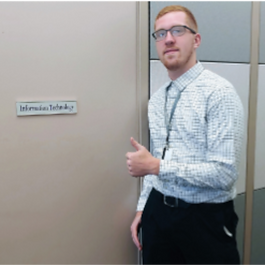
Jacob Ritter believes the best part of Vocational Rehabilitation (VR) is that if you’re willing to do your part, the rest will come naturally. “If you really want to put in the work and effort, VR is really for you,” he shared. While in high school, Jacob received Pre-Employment Transition Services and was introduced to a job-exploration program in IT. He soon enrolled in the Four Rivers Career Center’s IT and cybersecurity training program, where he discovered his passion for the field. With support from VR’s progressive employment program—offered in collaboration with the Missouri Job Center of St. Charles and MERS Goodwill—Jacob secured an IT position with Compass Health Network. His counselor, Dina Brockman, also helped him with certification and résumé writing, always providing encouragement. Jacob excelled in his role and transitioned to permanent employment with Compass Health. Looking ahead, he hopes to advance in the company and deepen his work in cybersecurity. “It’s like being a detective to find breaches before they happen. It’s intriguing,” Jacob said.

CONNECTICUT
Fatma, a 19-year-old art major at the University of Hartford, is building a strong foundation for her future with support from Connecticut BRS. She first connected with BRS at the end of her senior year of high school, when she met her counselor, India. From the very beginning, India has been a steady source of encouragement—offering career readiness tips, connecting Fatma with resources, and supporting her academic journey.
With BRS’s help, Fatma completed her freshman year of college without the stress of financial barriers. She’s received assistance with tuition, career research, and documentation needed to explore temporary work opportunities through Capital Workforce Partners.
“India has been a huge support in my schooling and career path,” Fatma shared. “I know I don’t have to worry about the future because BRS is helping me succeed.”

NEBRASKA
Macy Munderloh, a West Point High School student, was introduced to Nebraska VR during her junior year. With a learning disability that made it difficult to stay focused, she worked with Pre-Employment Transition Services Coordinator Misti Halsey on self-advocacy, communication, and workplace readiness.
Through VR, Macy explored career options with job shadows at Graybeal’s Food and Hy-Vee Dollar Fresh before beginning a work-based learning experience at Hillside Villa Nursing Home. There, she served meals, worked in laundry, and helped in the kitchen. “It felt great, and I liked it a lot. I liked that I could meet new people that I can trust,” Macy shared.
Her dedication impressed supervisors, who offered her a job. Today, Macy proudly serves residents at Hillside Villa.

TENNESSE
Lydia Taylor, a 2024 graduate of Ravenwood High School, is already making big strides toward a successful future. While waitlisted for TCAT’s Cosmetology Program, she enrolled in the Business Education Technology program at the Tennessee Rehabilitation Center (TRC), where she quickly discovered a new passion. With support from TRC staff, Lydia built confidence, developed professional skills, and earned her Microsoft Office Specialist certification. She also obtained her driver’s permit—another step toward independence. TRC’s hands-on training and career readiness support helped Lydia prepare for real-world opportunities, including a highly competitive AWS summer internship with TennCare. Typically reserved for college upperclassmen, Lydia stood out during her interview and was offered the position on the spot. Lydia’s success is a testament to her determination and the valuable support she received through TRC. Her journey reflects how the right environment can empower young adults to thrive. The Tennessee Division of Rehabilitation Services is proud to celebrate Lydia and all of her success.

IDAHO
In 2022, Devin was referred to Idaho Vocational Rehabilitation by his teacher, opening the door to career exploration programs that helped him identify his future path. By graduation in 2024, he set his sights on becoming an RV Service Technician. With VR’s support, Devin attended the National RV Training Academy in Texas, where he completed advanced certifications in RV service, solar and generator systems, and inspections.
Returning home, Devin joined his family business, Austin RV, LLC. His skills allowed the company to expand into in-house repairs, mobile services, and inspections, creating significant growth. “Voc Rehab helped me so much with getting my training and skills to grow our business,” Devin said. Today, he’s driving success in Idaho’s RV industry.

SOUTH DAKOTA
Before his stroke, Shawn was the Executive Director of a trade organization in South Dakota that supports businesses. At the time, his organization partnered with vocational rehabilitation to promote the hiring of people with disabilities. His stroke happened during a business conference in Oregon; fortunately, Shawn was with friends who quickly contacted emergency services. He woke up in a hospital and immediately realized he was going to have to relearn how to do everything. Shawn underwent intensive therapy and then received help from vocational rehabilitation, including counseling and guidance, job exploration, assistive technology, and a benefits analysis. His perseverance, faith, family, and positive outlook were the real reasons behind his successful recovery. Now, Shawn is back at work as a program specialist with the South Dakota Department of Game, Fish, and Parks. When it comes to vocational rehabilitation, Shawn says, “You are not just a number to them.” When he woke up in the hospital room after his stroke, he knew he would have to “climb the mountain all over again”—and vocational rehabilitation was happy to help.

COLORADO
In 2022, Colorado DVR counselor Emily Jensen began working with Ana, a young woman eager to explore career options. With the support of her team—including her guardian, an employment specialist, and DVR—Ana explored retail, animal care, and other fields before discovering her true calling: childcare. To prepare, she earned her CPR certification and began working toward her high school diploma, a key requirement for her field.
In 2023, Ana was hired at a local elementary school, where she quickly thrived. “She interacts with the kids, running around playing card games and puzzles—she does so much for our program,” her supervisor shared. Ana built strong connections with children and coworkers, excelling at communication and always seeking feedback.
For Ana, the pride is personal: “I get paid and I just feel great that I have my job.” Her journey shows how perseverance, teamwork, and vocational support create lasting success.

UTAH
When Quade first applied to vocational rehabilitation (VR) as a high school student, he faced significant emotional, social, and educational challenges and was unsure about the program. His VR counselor listened to his concerns and encouraged him to believe in his potential. Through VR, Quade graduated from high school, attended therapy to overcome barriers, earned a bachelor’s degree from Utah State University–Uintah Basin, and secured competitive employment as a secondary education teacher in the Uintah School District. “VR gave me the tools to succeed in my workplace, earn my degree, and impact my community,” he shared. Quade was later honored with the Showalter Endowment Excellence in Teaching Award by the Uintah Schools Foundation. Grateful for the guidance he received, he credits much of his success to his VR counselor. Their collaboration is a shining example of the positive outcomes VR can achieve.

VIRGINIA
The journey of University of Mary Washington graduate Adrianna Giddings illustrates how passion and perseverance, paired with strategic support, can transform opportunity into impact. With a deep commitment to universal design and accessibility, she set out to find a career where her skills could serve the greater good. Accessibility isn’t just a goal—it’s a pathway to inclusion.
Partnering with a Business Relations Specialist, Adrianna identified a Paid Work-Based Learning experience that connected her to the City of Norfolk’s Diversity Office. From her first interview, she impressed with knowledge and enthusiasm, soon becoming a valued team member. Over four months, she advanced accessibility in city programs and events, leaving a lasting mark. When passion meets opportunity, communities thrive. In August 2025, Adrianna proudly began her full-time role.

GEORGIA
In 2019, Stephen Thomas survived a car accident that left him gradually losing his eyesight. His doctor told him to accept retirement, but Stephen refused. “Somehow, some way, I was going to work again.” Searching for options, he discovered the Georgia Vocational Rehabilitation Agency (GVRA) and its Business Enterprise Program (BEP), which equips blind and low vision individuals to operate food service facilities. “I was so impressed with what Will said about the program. I became excited about this opportunity. I followed up and followed up.” Stephen completed six months of training, worked as a relief operator, and later took over a vending route at the CDC. By 2022, he successfully bid on a snack bar and micro-market at the Floyd Twin Towers in Atlanta, eventually expanding to multiple locations. “Follow up, follow up, follow up. Thanks to BEP, I beat the odds.”

ARIZONA
From childhood, Joshua Sirek, an adult with high-functioning autism, was fascinated with maps and roads. That passion grew into a clear goal: to become a transportation engineer. As the eldest of four children, three with autism, the cost of college seemed out of reach for his single parent. Vocational Rehabilitation Services (VRS) changed that. While attending community college in Minnesota, a rehab counselor met with him regularly and worked closely with disability services, while VRS also helped cover tuition and books. After the family relocated to Arizona, Joshua continued his studies online with full support for tuition and books until graduation. In May 2024, after six years of dedication, he earned a Civil Engineering degree from the University of North Dakota. Today, he works in Chandler, Arizona, as a Transportation Engineer Roadway Designer. No longer relying on Social Security Disability, Joshua is financially independent—thanks to VRS’s investment in his education and future.

ALASKA
For Ashley Maximus, coffee has always been more than a drink—it’s a ritual. Growing up blind in a family where mornings began with the rich aroma of fresh-brewed coffee, she learned to treasure the experience. With support from Alaska DVR, Ashley pursued a university education, covering tuition and books, and even spent a summer in Italy, where she fell in love with the café culture. Graduating during the 2008 recession, she took a job as a barista at Starbucks, intending to work her way up. Over 13 years, she became a trainer, coffee master, and eventually shift supervisor, all while raising her son and relocating to Alaska. There, Ashley reconnected with DVR and followed her dream of becoming a café owner. “I’d dreamed of owning my own café,” she said. “DVR helped make that dream a reality, giving me the skills I needed to be a successful entrepreneur.” Today, Ashley proudly runs her café as a Blind Licensed Vendor in a state building and courthouse, serving her community with skill, heart, and the same love for coffee that shaped her journey.

RHODE ISLAND
Magnum came to the Rhode Island Office of Rehabilitation Services (ORS) in 2023, where he was determined legally blind and referred to Services for the Blind & Visually Impaired (SBVI). With counselor Karen Russell, he discovered the Randolph Shephard Business Enterprise Program (BEP)—a path he had never known was possible. The idea of running his own café sparked immediate excitement. Magnum worked tirelessly toward his goal, completing food safety certification, vendor training, and nine weeks of hands-on experience with BEP vendors across Rhode Island. Step by step, his confidence grew. Today, Magnum runs the Coffee Plus Café at the Garrahy Court House, proudly serving customers while building his independence. His journey is proof that with determination, opportunity, and support, challenges can be transformed into dreams realized. Magnum’s story reminds us that success is not about what you lose—it’s about what you build when you refuse to give up.
HAWAII
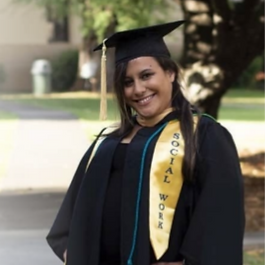
Amy’s story is one of perseverance, purpose, and hope. She registered with Hawaii DVR at just 14, encouraged by her Teacher for the Visually Impaired, and began attending youth programs that built her confidence and skills. After losing both her parents at a young age, Amy found strength through DVR summer camps and employment opportunities, including an expedition to the Grand Canyon that left a lasting impact.
With DVR’s support, she pursued higher education, earning an associate’s degree, then a bachelor’s in social work from the University of Hawaii in 2018. Inspired by her own experiences growing up around hardship, she committed herself to helping others. She went on to complete her master’s degree in 2019 while working full-time, determined to make her education count.
Today, Amy serves as a Social Worker IV with the State of Hawaii’s Department of Corrections and Rehabilitation. Along the way, she married in 2022 and became a proud mom in 2024. By engaging with vocational rehabilitation early, investing in education, and pursuing her passion, Amy is now living the life she dreamed of: a meaningful career, a loving family, and a future filled with possibility.

OKLAHOMA
Emeka Nnaka’s life changed forever on an Arkansas football field in 2009. A 6-foot-5 Georgia native, he had come to Tulsa for college but, after struggling in school, joined the Oklahoma Thunder as a defensive end and linebacker. His football career ended abruptly when he broke his neck during a game, leaving him paralyzed. In 2012, a visit to Langston University led to a conversation with a professor who encouraged him to return to the classroom. Nnaka contacted DRS, which helped him enroll that fall at both Tulsa Community College and Langston University, covering his tuition, books, and even providing an iPad to support his studies. Determined to succeed, he earned a bachelor’s degree in rehabilitation counseling from Langston and later a master’s degree in human relations with a focus in clinical mental health counseling from the University of Oklahoma. “I remember telling my counselor, ‘I promise, if you invest in me, I will make it count. Every single day now, I am making it count,” he said. With additional support from DRS, which also helped him regain the ability to drive, Nnaka built a new path forward and today works as a mental health therapist and motivational speaker, inspiring others with his resilience and determination.

ALABAMA
Ben Abercrombie of Hoover, Alabama, walked onto the field in 2017 as an Ivy League football starter in Harvard’s first game of the season. His teammates called him “Badgercrombie” for his relentless pursuit of receivers. But after one big play, he was not able to walk off. A hard tackle caused a severe spinal cord injury that left him paralyzed from the neck down and fighting for his life. After the accident, he refused to quit school and committed to returning to Cambridge to complete his studies. Vocational Rehabilitation Services (VRS), a division of the Alabama Department of Rehabilitation Services, became a big part of his game plan. Working with an assistive technology specialist, Ben learned how to use eye gaze technology to independently navigate his chair and software to use his voice for schoolwork on his computer. “The more I got comfortable with it, the more I realized that I could basically do just about everything I used to be able to do,” Ben said. Ben graduated from Harvard in 2025 with a degree in economics and is pursuing a career as a personal financier for professional athletes.

NEW JERSEY BLIND
Five years ago, Hillsborough Township hired Paul Scaltro, a visually impaired audio producer, to modernize communications through podcasts. His deep voice and storytelling skills quickly made the podcasts a community favorite. When the COVID-19 pandemic struck, Paul transitioned to the Health Department, where he supported contact tracing and outreach. With accommodations from the New Jersey Division of Vocational Rehabilitation Services and the Commission for the Blind and Visually Impaired, he excelled in this new role, using assistive technology to navigate databases and communicate effectively. Praised for his adaptability, empathy, and professionalism, Paul became a vital part of the pandemic response team and is now a permanent member of the Health Department, contributing to public health programming and education. Reflecting on his journey, Paul shared: “I believe it’s important for everyone to take a moment to celebrate their accomplishments. Too often, we focus on the negatives and overlook the milestones we’ve achieved… None of this would be possible without the team behind me, it truly takes a village.” His story proves that inclusion and accessibility remove barriers, enabling individuals to thrive and strengthening entire communities.

GUAM
Jared Matanae turned to the Division of Vocational Rehabilitation (DVR) under the Department of Integrated Services for Individuals with Disabilities (DISID) to pursue his dream of becoming a licensed cosmetologist. With DVR’s support, he enrolled at Mariacy Beauty Academy (MBA), where tuition, tools, exam costs, and licensing fees were covered. In MBA’s inclusive environment, Jared gained the skills and confidence to thrive. “Being a barber, you have to have good marketing skills and know how to communicate with your customers,” he explained. After graduating, Jared joined Butterhouse Barbershop in Dededo, Guam, where his schedule quickly filled with 4 to 12 clients daily. “In the barbering business, you always need to be hungry for more to succeed,” he emphasized. Today, Jared thrives as a professional barber with plans to open his own shop—proof that determination and support can turn dreams into reality

WASHINGTON D. C.
At just 21, Keith Moore is proving what’s possible when determination meets opportunity. Growing up with a disability, he often felt dismissed or misunderstood, but he credits the DC Rehabilitation Services Administration with helping him chart a future. “I always felt guided in the right direction,” he says. With their support, Moore graduated as valedictorian of his high school and is now studying political science at the University of the District of Columbia. He also works as a special education paraprofessional, determined to provide the encouragement he once needed himself. Today, Moore serves on Washington, DC’s Advisory Neighborhood Commission, representing Ward 8 and advocating for safer streets, better grocery access, and meaningful youth programs. Through vocational rehabilitation, he found not just a career path, but the confidence to lead—and to model consistency, hope, and resilience for others.

TEXAS
Denise V. Nunez, owner and director of Signology LLC in El Paso, Texas, has made it her mission to create safe, motivating environments where Deaf clients can thrive. One of her most inspiring success stories came from her very first customer, an older Deaf man in his late 50s eager to return to work after COVID-19. Despite his extensive warehouse experience and an award recognizing him as an Outstanding Associate with a Disability, the job search stretched on for a year as employers hesitated. Denise applied to custodial, food service, and warehouse jobs on his behalf and advocated with local businesses, reminding them of the value and tax incentives in hiring individuals with disabilities. Finally, in 2021, a compassionate employer offered him an interview. Denise interpreted in ASL, and his enthusiasm shone through, leading to an immediate job offer. Since then, he has thrived in his position, receiving three raises and moving beyond minimum wage to financial stability. Denise calls this a defining moment for her and her company, showing how perseverance, advocacy, and opportunity can open doors at any stage of life. Today, through Signology, she continues to ensure Deaf job seekers are not just placed, but supported for long-term success and growth.

SOUTH CAROLINA
Angela Thomas’s story is one of resilience and renewal. Once ready to give up on life, she found strength through the support of the South Carolina Vocational Rehabilitation Department (SCVRD). During a difficult period of incarceration, Angela chose to see her time as a chance to start over. “My life before prison was not the best,” she reflects. Determined to change, she earned her SafeServ certification and began mentoring others who also sought a better path.
After her release, Angela worked with SCVRD to adjust to life beyond prison, gaining the tools, encouragement, and accommodations she needed to thrive in the workplace. With support from a dedicated rehabilitation technician, she built confidence, advanced professionally, and began shaping a future filled with hope. Her journey proves that transformation is always possible when second chances are met with determination and support.

OREGON BLIND
Sal Barraza has never let vision loss limit his success. With support from the Oregon Commission for the Blind’s (OCB) Business Enterprise Program (BEP), he has been running popular food businesses in Salem since 1989, building a career defined by resilience, service, and entrepreneurship. BEP empowers Oregonians who are legally blind to own and manage their own businesses, providing both training and opportunity, and through the program Sal has thrived. Today, he manages the Valley Café at the Oregon Department of Human Services Building, serving hundreds of staff and visitors daily, and also operates the Outta Sight Food Cart, a BEP pilot program that trains Oregonians with vision loss in crucial job skills while inspiring future entrepreneurs. His success demonstrates the impact of vocational rehabilitation in action, and by mentoring others and proving what’s possible, Sal is helping OCB expand opportunities across Oregon. From hot coffee to fresh opportunity, he is serving up independence one plate at a time.

MARYLAND
After college, Tinille dreamed of becoming a Physician Associate (PA). With support from the Maryland Division of Rehabilitation Services (DORS) and counselor Katie Coffman, she received financial help for graduate school and assistive technology to succeed. She earned her master’s in medical sciences in December 2023, completed a bridge doctoral program, and proudly attended her PA graduation in May.
Today, she works at a private internal medicine practice. “It’s just a joy to be able to take my time – especially with my older patients – and contribute to their overall wellness plan,” she said. An advocate for DORS, Tinille shares: “DORS definitely opens up doors for people with disabilities. It was tremendously helpful to me having fewer battles to fight. I think DORS is amazing!”
In 2024, she also published her book, The Art of Compassionate Living, inspired by Maya Angelou’s words: “You may not control all the events that happen to you, but you can decide not to be reduced by them.”

ILLINOIS
In 2017, Jacques LaCour was diagnosed with Leber's Hereditary Optic Neuropathy, a genetic condition that caused irreversible vision loss. This life-changing event occurred just as he and his wife were expecting their first child, and it also led to the loss of his job. Facing uncertainty, Jacques received support from his former mentor, Diane Rocket, and her husband, who organized a fundraiser to help with medical and living expenses.
With determination and a passion for technology, Jacques connected with the Illinois Department of Human Services’ Division of Rehabilitation Services (IDHS-DRS). He gained access to assistive technology and training, including screen readers and keyboard navigation skills. With this support, Jacques returned to school, where he earned a master’s degree in Cyber Defense with a perfect 4.0 GPA.
He now works as a Cybersecurity Incident Responder, protecting organizations from cyber threats. Beyond his own success, Jacques continues to give back — donating remaining funds from his fundraiser to help others in need. His journey demonstrates the impact of perseverance, community, and vocational rehabilitation in overcoming life’s toughest challenges.

GEORGIA
Jasmine Moore has built a life defined by resilience and service. After graduating from Kennesaw State University, she began work at the Douglas County District Attorney’s Office. Starting as a paralegal, she was later promoted to program manager for diversion programs in the PACE Unit, where she helps individuals find better paths and reduce recidivism.
Jasmine also founded Grateful Hands, Inc., a nonprofit that empowers people with disabilities through scholarships, inclusive career fairs, and holiday sponsorships. With GVRA’s support, including a modified van, she gained independence to drive herself to work and continue her mission of advocacy.
“I am dedicated to creating a world where everyone, regardless of ability, has the chance to thrive and achieve his full potential,” Jasmine said. She added: “I would absolutely recommend the Georgia Vocational Rehabilitation Agency to anyone living with a disability who may need assistance for ‘big’ life moments.”

MISSOURI
Ansur Adams has dealt with many challenges throughout his life—unemployment, poverty, mental health issues, addiction, and incarceration. He never thought he would get through it all, but instead he has turned his life around. “It’s been a process,” he said. Driven by a desire to help others, Ansur pursued a degree in social work, particularly focused on supporting at-risk youths and ex-offenders, believing his own experiences would make him a stronger social worker. With guidance, counseling, and financial assistance from VR, he received encouragement to follow his passion and support even through the difficult times. VR covered his tuition, books, fees, a computer for his classes, and the costs of his credentialing, ultimately enabling him to earn a master’s degree in clinical mental health counseling. Today, Ansur is a licensed professional counselor and works as a program development manager with Powerhouse Community Development. Grateful for his journey, he now wants to give back, helping others stay on the right path and avoid going down the road he once traveled.

NORTH CAROLINA
A catastrophic boating accident left Thomas Duty III unable to walk and with limited use of his arms. The sudden change ended his career in law enforcement, but with the support of the Division of Employment and Independence for People with Disabilities (@nceipd), Thomas began to see new possibilities. Vocational rehabilitation services encouraged him to pursue education and channel his background in criminal justice into a new path.
Before his accident, Thomas served as an officer with the Emerald Isle Police Department. Afterward, with determination and support, he earned his master’s degree along with graduate certificates in criminal justice education and in public management and leadership.
In May 2024, Thomas graduated, and just three months later, he stepped into the classroom as an adjunct instructor. Today, he teaches in the Criminal Justice & Criminology Department at East Carolina University. His story proves that resilience and education can transform even the greatest challenges into new opportunities.
MINNESOTA
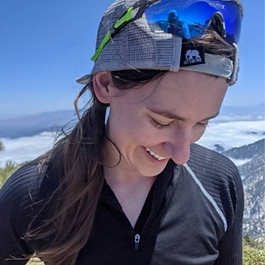
Sarah J. once thrived as a mountain biker, skier, and engineer, but her life changed dramatically after a 2015 biking accident caused neurological complications, including severe photophobia. “I look at a screen and it’s just like a flashlight. There’s nothing but a bright light. I can’t discern anything on it anymore,” she explained. Everyday essentials like phones and computers became inaccessible.
That’s when Minnesota State Services for the Blind (SSB) stepped in. With their accessible, barrier-free support, she began learning braille and using screen readers, slowly regaining confidence. “SSB’s resources, offered at no cost, helped me rebuild my confidence. I progressed from painstakingly reading 30 braille pages to confidently navigating novels,” she said.
Today, Sarah is writing a therapeutic novel, working part-time with the Minnesota Youth Ski League, and finding new ways to connect with her community. She credits SSB and the blind community for reminding her that resilience and adaptability know no bounds. “Yes, everything is challenging, but everything is also possible.”

OKLAHOMA
Susan Sanchez graduated a year early from Mangum High School but struggles with
her mental health would lead her to drop out of college.
Years later, encouragement from a DRS counselor would open a door to helping her
build a future.
“I have bipolar (disorder) with depressive symptoms,” Sanchez said. “That is what I had
for a long time. I was diagnosed in high school. I ended up with anxiety.”
She said in her darkest moments after graduating in 1997, Sanchez was
noncommunicative, hearing voices and often having hundreds of nightmares on the
nights when she was able to sleep.
In 2013, Vocal Rehabilitation Specialist Laura Prater reached out to Sanchez to see if
she was ready to return to college. Sanchez had sought DRS’ services while in school
but had become disconnected from the agency as her mental health woes mounted.
Sanchez found needed encouragement and empowerment from Prater.
“All of this support made me feel safe,” she said. “It was the right time for me to be
doing it. My confidence was increased by the support of DRS. It affected my family, and
everybody else because they were like, ‘I am so thankful they (DRS) are helping you
because we wouldn’t be able to.’”

NORTHERN MARIANA ISLANDS
"A Journey of Hope: Connie C. Atalig's Story
Meet Connie C. Atalig — a woman whose journey shows that new beginnings are possible when hope meets opportunity.
For years, Connie lived with a physical disability that limited her mobility and confidence. “I stayed home most of the time,” she said. “I didn’t think there was much more out there for me.”
Everything changed when she discovered the Office of Vocational Rehabilitation (OVR). With support from compassionate counselors, Connie accessed work experience training, assistive technology, transportation help, and other essential services.
Step by step, she regained her confidence and independence. In September 2012, Connie was hired full-time as an Administrative Assistant with the Department of Public Works, a position she held with pride for over a decade.
In December 2024, Connie retired happily and now enjoys socializing with peers at the Office on Aging, staying active in her community, and embracing her well-earned retirement.
Connie’s story reminds us that with kindness, opportunity, and courage, lives can change in beautiful ways.
Congratulations, Connie — and thank you for inspiring us all!"

MONTANA
Montana Vocational Rehabilitation partnered with state apprenticeship program to support electrical and plumbing apprentices who completed hands-on training but struggled with education requirements due to disabilities. In Billings, MT, apprentices and supervisors met with a Voc Rehab Business Services Specialist to identify challenges and accommodations—many of which employers were unaware they were already providing. These apprentices and employers now receive ongoing support through Voc Rehab Business Services. One apprentice from GPS Electric, who had previously failed the journeyman test, received accommodations and passed in April, later becoming a residential project manager. His success highlights the impact of tailored support. Currently, 12 apprentices across Montana are being assisted, by the Voc Rehab Business Services Specialist—also a certified rehabilitation counselor—able to sign off on accommodations. This collaboration continues to strengthen pathways for apprentices and employers alike.
CONNECTICUT
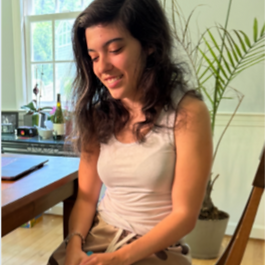
Bella, a student from Glastonbury, Connecticut, is thriving at Curry College, where she is pursuing a degree in psychology. She loves the program, the school, and the friendships she has built. “I have a ton of friends and I’m just excited to continue studying there,” she said.
Bella first connected with the Bureau of Rehabilitation Services (BRS) through a youth leadership program in high school. “BRS basically helped me a lot in my transition from high school to college, particularly the independent living aspect,” she explained.
One of the most impactful supports has been assistive technology. “I don’t know where I would be without some of the tools they gave me,” Bella said. A MacBook, iPad, and Apple Pencil — along with apps for color-coded notes and voice-to-text — have transformed her ability to stay organized and succeed in class. BRS also provided simple but vital tools, like grabbers, that increased her independence.
“Thanks to BRS, I just feel so much more comfortable and independent. It’s been such a launching point for me,” Bella shared. She now plans to complete her degree, earn a master’s, and launch a career in psychology.

DELAWARE
At just 20 years old, John Benson’s life changed after a diving accident left him paralyzed. Despite the challenges, his passion for agriculture never faded. Determined to return to farming, John partnered with a local farmer to create an innovative solution: using a modified engine crane and Hoyer sling to transfer himself into farm equipment. This adaptation allowed him to contribute to harvest and tillage work, and just ten years after his accident, John was farming again.
As operating equipment became more difficult, John turned to Delaware DVR for support. In 2022, he received a truck-mounted lift from Life Essentials Lifts. This device now enables him to transfer from his truck into the cabs of various farm machines, greatly expanding his ability to work and support local agriculture. Beyond farming, John enjoys wheelchair rugby, skiing, woodworking, and maintaining community Little League fields. His determination continues to inspire all who know him.

NEW MEXICO BLIND
Lawrence Locker is a dedicated employee at Clayton Lake State Park, where he maintains the grounds, hosts star gazing parties, and helps visitors enjoy the outdoors. Before losing his sight in 2014, Lawrence worked as a ranch hand and a truck driver, building a strong work ethic and love for the outdoors that continue to guide him today.
With support from the New Mexico Commission for the Blind, he has gained the skills and confidence to pursue meaningful work doing what he loves. The Commission has assisted him with schooling, therapeutic counseling, and learning to use assistive technology like his phone, computer, and email; all tools that help him thrive on the job. His advice to others who are blind or low vision: “Don’t give up…It’s just a part of your life, you have to learn to cope with. Through the help of the Commission, it will all get better.” Noting that although he lost his sight in 2014, he did not begin therapeutic counseling until 2024, and now wishes he had started sooner, calling it life changing. Today, Lawrence is proud to work independently in a job that brings him purpose and pride.

ARKANSAS
Warrenesha Arnold’s journey has been shaped by resilience, perseverance, and strong support. Diagnosed with dyslexia in her teens, she faced daily challenges that made school, deadlines, and social situations feel overwhelming. Still, she remained determined. After earning her undergraduate degree with honors, she pursued her passion for nutrition and business by entering the MBA program at the University of Arkansas–Fayetteville.
Graduate school brought new challenges, but Warrenesha leaned into her strengths. She developed time management skills, prioritized her mental health, and practiced mindfulness and journaling. When financial barriers appeared, Arkansas Rehabilitation Services stepped in with essential support.
She used all available resources—academic accommodations, counseling, and faculty guidance. One highlight was contributing to team projects, including a small business venture. Public speaking was tough, but through practice, she gained confidence. By her second year, she was recognized for her leadership, collaboration, and empathy.
Warrenesha also embraced self-care, learning that rest and mental well-being were vital. Earning her MBA marked not just academic success but a personal victory. Today, she is the proud founder of Nyarai Skincare, a thriving skincare line created for people of color—a testament to her strength, vision, and belief in herself.

PENNSYLVANIA
For 15 years, Dan Lauver has been a proud Commonwealth employee, but getting to and from work was never simple. Without his own accessible vehicle, he depended on others to give him rides. “They don’t have to load up my wheelchair and put me in their vehicle,” he explained. The process was difficult and limited his independence.
That changed when the Pennsylvania Office of Vocational Rehabilitation (OVR) helped Dan purchase a new van designed with adaptive technology. Before taking it home, Branch Driving School gave him a full evaluation, identified the right modifications, and trained him to drive safely. “They came and gave me an evaluation to see what equipment I needed. And then we went out on the road a little bit and drove to see if it was going to work for me,” Dan recalled.
His van now includes a hand control lever for gas and brakes, reduced-effort steering, a steering knob, and a touchpad for other functions.
For Dan, it represents more than convenience. “It’s just a whole new independence that I never had before. I can’t thank OVR enough for all the help they’ve given me.”

WASHINGTON
Roxanne McPeck’s journey with the Washington Division of Vocational Rehabilitation (DVR) has been one of resilience, discovery, and growth.
As a teen in Spokane Valley, Roxanne excelled in school, but chronic illness forced her to drop out of college twice, leaving her without confidence or direction. When a friend encouraged her to try DVR, she was hesitant. With the support of her counselor, she explored new options, eventually returning to Eastern Washington University to study biology and technical communication. “I adored biology, I loved microbiology, and I LOVED doing experiments at the bench and thinking hard about scientific research,” Roxanne recalled.
She thrived in research, teaching, and mentoring, earning both her bachelor’s and master’s degrees. Today, she is pursuing a PhD in microbiology at the University of Colorado Anschutz. Reflecting on her journey, she says: “With DVR’s help, I have kicked down many doors, and now I intend to hold them open for the next people to follow.”

UTAH
Claudia Ramos was determined to create a better life for her family and overcome the barriers of her disabilities. She dreamed of becoming a medical assistant but needed support to make it possible. That’s when she turned to vocational rehabilitation (VR).
With guidance from her VR counselor, Claudia enrolled in the medical assistant program at Mountainland Technical College in Lehi. Support from a Pell Grant and the Utah State Office of Rehabilitation (USOR) covered scrubs, supplies, transportation, exams, and her membership in Health Occupations Students of America (HOSA). She thrived, excelling in HOSA competitions at state and national levels.
After graduation, VR assisted with job readiness and placement, leading to an internship and full-time work with Revere Health. Now promoted to medical assistant, Claudia is building her career, supporting her family, and making healthcare brighter.

MINNESOTA
AnnMarie Killian once felt like every door was closed to her.
“I was struggling academically and didn’t see a future for someone like me who is Deaf. Every path I tried felt like another closed door, and I was ready to give up. Dropping out seemed inevitable,” she recalled.
That changed when her guidance counselor connected her with Bruce at Vocational Rehabilitation. “Instead of letting me walk away, Bruce encouraged me to give VR a chance. He referred me to the Minnesota Academy for the Deaf, and that one referral opened a door that forever changed my life.”
At the Academy, AnnMarie found the tools and support she needed to thrive. “Through VR, I found more than an education — I gained confidence, belonging, and the belief that my future was worth fighting for.”
Her journey didn’t stop there. With new skills, determination, and self-belief, AnnMarie built a career dedicated to service. Today, she is the President and CEO of @tdiforaccess, a nonprofit organization advancing accessibility and inclusion. Looking back, she reflects: “Vocational Rehabilitation doesn’t just open doors — it changes trajectories and transforms lives.”

VERMONT
Nga Willey came to HireAbility Vermont while working in a childcare center and pursuing her Child Development Associate (CDA) credential.
A referral from Adult Basic Education connected her with a counselor who truly listened. They discovered that Nga, who speaks Cantonese, had learned language entirely through speaking—never through formal grammar instruction. This made it difficult to keep up with coursework and navigate complex systems.
With tutoring and creative learning strategies, Nga earned her CDA and soon set her sights higher: she wanted to become a nurse. Her journey shows that with the right support, barriers that once felt overwhelming can become stepping stones toward success. Determined to move beyond public assistance and create a stable life for her daughter, Nga became a Licensed Practical Nurse (LPN), found full-time work, and is now earning a steady income. Nga’s story is a reminder that investing in people’s potential creates brighter futures not just for individuals, but for their families and communities as well.

NORTH CAROLINA
When Angela Ferebee came to work for North Carolina’s Division of Employment and Independence for People with Disabilities, she knew that she was a natural helper, and she knew that she wanted to serve her community. What she couldn’t know was that a head-on car crash and the devastating injuries that resulted from it would put her on the receiving end of the services she’s dedicated her life to providing others.
After nine months of recuperation, healing and support from her own agency, Angela, the Unit Manager for EIPD’s Elizabeth City office, was able to return to work.
“I know how much our services mean to our clients, because I’ve used these services,” she said.

NEBRASKA
Nate Sears always knew he wanted a career connected to the outdoors. As a senior at Lyons-Decatur Northeast High School, he connected with Nebraska VR and began working with Pre-Employment Transition Services Coordinator Misti Hasley. Knowing Nate’s passion for hunting and fishing, Misti suggested a Work-Based Learning Experience (WBLE) at Pheasant Bonanza, a hunting and fishing lodge.
With support from a skills trainer, Nate tackled tasks like feeding and watering dogs, cleaning pens, trimming weeds, filling clay pigeon machines, and replacing mulch for baby pheasants. Determined to make a good impression, Nate worked hard and impressed lodge owner Trent Leichleiter.
Alongside the hands-on work, Nate built skills in budgeting, communication, problem-solving, and self-advocacy. His part-time role became a full-time job after graduation, giving him steady employment close to home, opportunities to learn taxidermy, and the independence to build a life around his passions.
Nate proves that when passion meets opportunity, success is within reach.

TENNESSEE
The Tennessee Division of Rehabilitation Services is proud to recognize Jacob O’Bryan. Jacob always dreamed of becoming a police officer. But as he explored the demands of the job, he began to question if it was the right fit due to his disability. Still drawn to public safety, he didn’t give up—he pivoted. With support from the Greenville Community Services Unit, Jacob enrolled in a criminal justice program and found a new path: Emergency dispatch. DRS Career Training Specialist Shiree Brown worked alongside Jacob, helping him build confidence and career readiness skills. They focused on communication, conflict resolution, organization, and resume writing — tools he’d need in the field. When a contact at ETSU encouraged Jacob to apply at the Carter County Dispatch Office, he was ready. Shiree coordinated mock interviews to prepare him, and Jacob walked into the real thing with confidence. He got the job. Today, Jacob is thriving in his new role — with Shiree continuing to check in as he settles in and grows.

COLORADO
Jenny Siegle always loved sports. As a C4/C5 quadriplegic, she wasn’t sure how to turn that passion into a career. But Jenny was no stranger to breaking barriers—at just two years old, she became the first child in Colorado to receive a power wheelchair.
She connected with the Colorado Division of Vocational Rehabilitation (DVR) in high school through her IEP, around the time her love of journalism began to grow. DVR helped her earn a Bachelor’s degree in Journalism and complete an extensive adaptive driving program. With her driver’s license and newly adapted van, Jenny was ready to chase her dream.
Her first step was an internship with Altitude Sports. She has worked there ever since, producing games for the Broncos, Avalanche, and Rockies. Altitude has supported her every step of the way, even creating an adapted control panel to make her work more accessible.
“Don’t put limitations on yourself—whatever dream you have, do what you can to achieve it,” Jenny said. “Be your own trailblazer. Be your own advocate. If it’s something you want, give it a try.”

VIRGINIA
Malik Thornton once spent nights moving from couch to couch while keeping up with school and marching band. “I had an IEP and struggled with reading and writing at grade level,” he said. “On top of that, I was homeless, moving from couch to couch. My peers could go home, do homework and relax. My nights were about finding water for my house or making sure my family’s needs were met and then still getting my homework done.”
His special education teacher connected him with the Virginia Department for Aging and Rehabilitative Services (DARS), which provided tuition support, dorm essentials, music books, and basic living supplies. “Because DARS helped take care of those needs, I could focus on learning and being involved on campus,” Malik said.
At Longwood University, he thrived — performing in choirs and ensembles, joining a fraternity, and serving as an advocate for minority and disability inclusion. Today, Malik is the band director for grades 6–12 at his former middle and high schools. “My goal is to be a change-maker, helping students see what’s possible for their lives, no matter where they’re starting from.”

ARIZONA
Imani Muhammad knows what she wants and she is determined to get it.
With help from vocational rehabilitation, she landed her first job in retail. But she had a bigger dream: working with animals, especially dogs.
That is when VR stepped in again, helping her secure a position as a spa therapist at Dogtopia, a doggy daycare and boarding facility. More than a year later, she is thriving. “She’s great with the dogs, patient, gentle, and always detail-oriented,” said her job coach, Dana Carrizosa of WorkAbility, United Cerebral Palsy of Arizona.
Imani’s love for animals runs deep. She has two cats and two dogs of her own. The toughest part of her day is convincing stubborn pups to hop in the tub. But with quiet determination, she gets it done.
Her goal now is independence. She wants to work more hours, continue building her skills, and keep contributing to her community. “I’m hoping to stay here forever,” she said.

ALABAMA
Jerry Peters, a retired U.S. Marshal from Troy, Alabama, spent years chasing dangerous fugitives and serving three tours in Afghanistan. “I’ve been around gunfire, I’ve been around explosions. I’ve been hit in the head,” he said. Like many in his field, he never sought treatment. “You don’t want to think that you need assistance.”
Decades later, struggling with PTSD and symptoms he couldn’t explain, Jerry reached out to the Alabama TBI Helpline. That call connected him with the Alabama Department of Rehabilitation Services and eventually the SHARE Military Initiative at Shepherd Center.
“They did tons of tests... cognitive, speech therapy. One of the things that really affected me was that people cared,” Jerry said.
Today, VR has helped Jerry find new purpose. He leads Operation Life Support and serves on Alabama’s Head Injury Task Force, helping others like him. “We need help. That’s just all there is to it.”